
We specialise in sustainable trauma resolution,
often within 1–5 sessions
Our Somatic & Equine Trauma Resolution (SETR) method integrates somatic (body-based) trauma therapy with equine-assisted nervous system co-regulation. Rather than reliving or retelling traumatic events, our work focuses on restoring physiological safety, completing interrupted defensive responses, and reorganizing relational patterns through embodied experience. The outcome is a felt sense that ‘it is over,’ as well as a feeling of agency and safety.
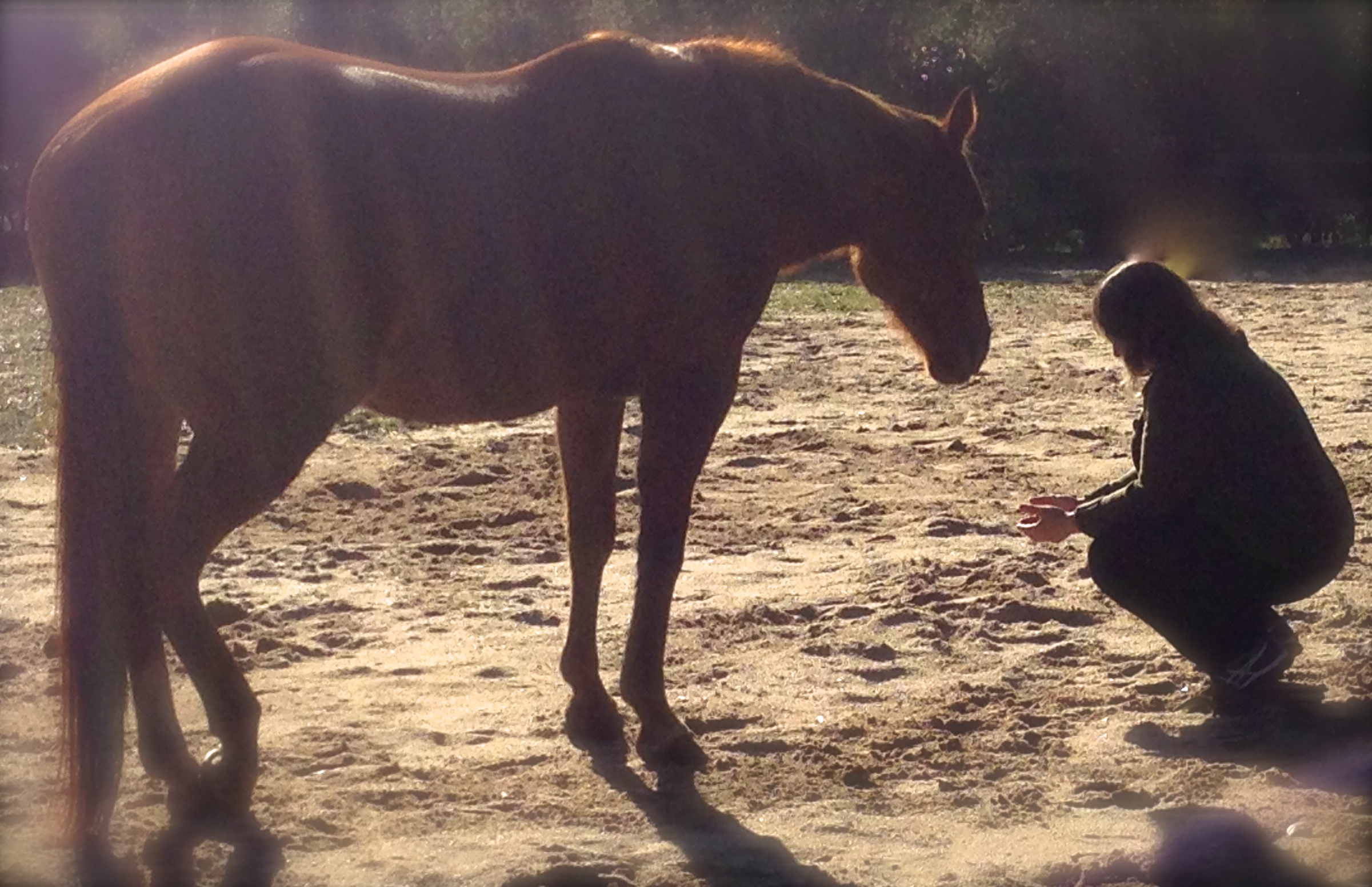
Horses provide immediate feedback, regulation, and relational presence. They function as highly sensitive regulators within a social nervous system oriented toward safety. Their therapeutic presence provides nervous system containment and supports co-regulation toward greater coherence. Rather than mirroring dysregulation, horses maintain regulated states that offer a stable, safety-based reference point.
As clients’ internal states shift, horses respond to changes in emotional congruence and regulation, providing immediate, non-verbal feedback while maintaining a field of safety. This allows clients to remain present, expand capacity, and process traumatic material with more presence, greater clarity, and physiological stability – often accessing states that are difficult to reach in traditional office settings.
What clients often report
- Reduced freeze and hyper-vigilance
- Better sleep patterns
- More capacity to go out / engage in activities outside familiar surroundings
- Increased feeling of calm, safety and greater capacity (tolerance) for day-to-day events
- A felt sense of completion around past events
- Improved relational boundaries and capacity
- Less need to “manage” symptoms
While outcomes are not guaranteed, these shifts often occur within a small number of focused sessions when conditions are riight.
OUR PROMISE
Our priority is safety and we always start and end with stabilising your nervous system. Consequently you will leave feeling better than when you arrived.
WHO THIS WORK IS FOR
This work is appropriate for:
- Acute (shock) trauma such as accidents, natural disasters, medical events
- Chronic trauma
- Domestic violence, abuse and relational trauma
- cPTSD (complex trauma usually from an early age)
- Chronic freeze, collapse, startle responses, or anxiety
- Clients whose symptoms persist despite understanding “why”
- Those caught in repetitive trauma loops driven by implicit conditioning – such as patterns of not speaking up or advocating for oneself, leading to chronic dis-empowerment
While trauma resolution is not predictable or guaranteed, we commonly see significant shifts within 1–5 focused sessions when conditions are right. This work may not be appropriate for everyone, and suitability is determined through careful consultation.
Clients not suitable
- Active addiction without stabilization
- Severe instability requiring long-term containment
- Clients seeking open-ended weekly therapy
HOW TRAUMA RESOLVES IN THIS WORK
Trauma is not defined by what happened, but by what the nervous system was unable to complete at the time. When an overwhelming event occurs, the body may remain organized around survival long after danger has passed. Our work supports completion and integration so life no longer has to be organized around past danger.
Many trauma symptoms persist not because the threat is ongoing, but because the nervous system continues to operate under outdated survival rules formed during danger. Once physiological safety is restored, these implicit survival rules must be updated at an embodied level — otherwise the system recreates familiar trauma patterns even in the absence of threat.
Trauma resolution requires more than insight. It requires three conditions:
- Restoration of physiological safety
- Completion of interrupted survival responses
- Updating of outdated survival-based beliefs
When these conditions are met, trauma patterns often resole efficiently – in as few as 1-5 sessions rather than requiring years of management.
Why our SETR method is powerful
Our SETR method combines equine-assisted therapy with Somatic Experiencing (SE) processes and is unusually powerful because it:
works directly with the nervous system, in real time,
in a relational field that is non-verbal, embodied, and honest.
Why horses and Somatic Experiencing work well together
Horses
- are prey animals with highly sensitive nervous systems, attuned to their environment and the people in it
- respond instantly to regulation vs dysregulation
- do not engage in human attachment defenses (no pleasing, no abandoning, no shaming)
- provide relationship without language, narrative, or expectation
- do not tolerate inauthenticity
Somatic Experiencing processes
- track nervous-system states moment to moment
- build capacity through titration and pendulation
- restore agency and choice
- resolve trauma without reliving it
Together they create a living biofeedback loop for the nervous system
Many clients come to this work after years of insight-oriented therapy. Insight is valuable, but trauma resolves when the nervous system regains flexibility, agency, and safety. This is where my work is focused.
What next?
Find out more about stress and trauma
Learn about how horses work with us
Learn about our sessions- structure, intervals, and cost

